Commercial automation is most useful when it takes care of the routine tasks that someone has to remember every day: lights on before staff arrive, thermostats set back at night, the right people able to open the door. AppxSmart, by SwayPC, plans these systems for offices, retail stores, hospitality spaces and other suitable commercial properties from Hollywood through Key West.
What can automation handle in a commercial space?
The strongest candidates are repeated, predictable tasks. Opening and closing routines, scheduled lighting, climate set-points by time of day, and access codes for staff and vendors cover most of what small and mid-size businesses ask for.
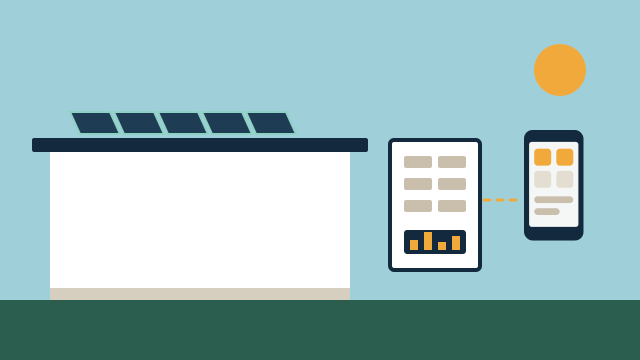
A typical project combines lighting control with climate schedules and locks and access control. Cameras and video doorbells can be brought into the same app when the models support it, and energy monitoring can show which circuits draw power after hours. Each piece is chosen for the way your space operates, with manual overrides for the days that do not follow the schedule.
What does our assessment cover, and what does it leave out?
We assess the equipment, network and controls inside the space you operate, and we tell you which existing devices can be integrated. Compatibility depends on the exact model and firmware, so we verify each device before promising anything.
The assessment does not cover structural work, electrical code compliance, fire and life-safety systems or the building’s central mechanical plant. Electrical work that requires a license is handled by appropriately licensed trades, and we coordinate with them where the project needs it. In leased space, we also confirm with you what the landlord or building management controls.
When is a BMS or a security integrator the better choice?
Some projects are better served by a different kind of provider, and we will say so. A building management system, or BMS, is the right tool for larger buildings with central chillers, many HVAC zones or an engineering team that monitors the building. Those systems are installed and maintained by commercial controls contractors.
Likewise, intrusion alarms, monitored alarm systems, fire alarm systems and code-required access control belong with a licensed security or fire alarm contractor. Our role in those projects, if any, is the parts around them: lighting, comfort, network and everyday convenience controls.
| Situation | Usually a good fit for AppxSmart | Usually better with another provider |
|---|
| Office suite or small office building | Lighting schedules, thermostats, staff door codes, network | Central plant controls in a large tower |
| Retail store | Opening and closing routines, display lighting, vendor access windows | Monitored intrusion alarm |
| Small hospitality property | Suite thermostats, guest codes, common-area lighting | Fire alarm and life-safety systems |
How should staff and vendor access work?
Each person should have their own code or credential, so access can be changed for one person without affecting everyone else. Supported smart locks can limit a code to certain days and hours, and most platforms record who entered and when. We plan who can create and remove codes, so access stays manageable when staff turn over.
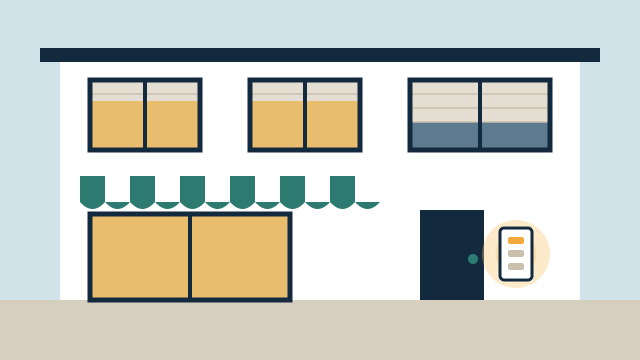
Illustrative example: A café owner wants the morning baker to open the back door at 5 a.m. and the cleaning service to enter only on Sunday evenings. The plan gives each a scheduled code on a supported lock and turns on the back-of-house lights during those windows.
How AppxSmart can help
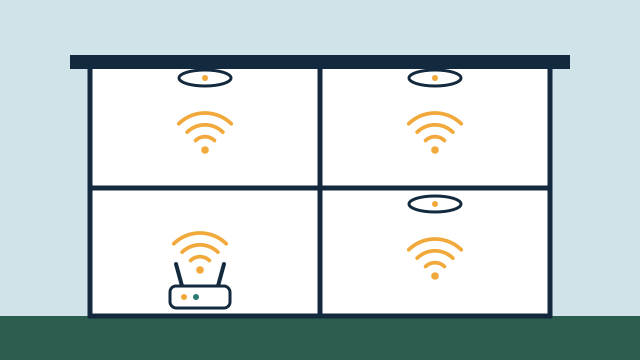
We visit the space, review what is installed and how the business runs, and prepare a written proposal with the scope and equipment for each phase. The network often matters as much as the devices, so we include Wi-Fi and networking where it is needed. Optional support agreements are available after installation.
To start, request a free consultation and we’ll contact you as soon as possible.