
Climate control
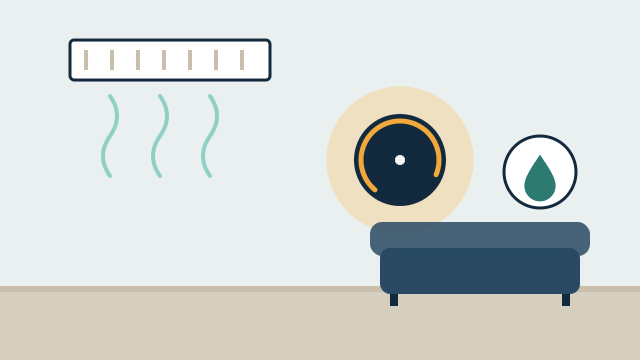
Comfortable rooms when people are there, sensible settings when they are not, and a clear view of temperature and humidity from anywhere.
What you can expect
- Thermostats follow schedules and routines instead of constant manual changes.
- You can check and adjust temperature remotely when the internet is available.
- Indoor humidity is visible where the thermostat or added sensors support it.
- Climate settings join arrival, departure, and closing routines.
Where it fits
In homes
- A second home held at an away setting and adjusted before you arrive.
- Bedroom zones that change for sleeping hours.
- Alerts when indoor temperature or humidity moves outside a range you choose.
In businesses
- Office or retail thermostats that follow business hours and holidays.
- Limits on the temperature range staff can set.
- A manager view of several zones or locations in one app or dashboard.
Air conditioning runs most of the year in South Florida, and humidity is part of comfort as much as temperature. Climate control is about setting the system to match how the property is used, then giving you a clear view of conditions when you are away.
What does climate control include?
At its simplest, a smart thermostat with schedules and remote access. For larger properties it can include several zones, extra room sensors that report temperature and humidity, and routines that change settings based on arrival or business hours. Everything is tied together through the same platform as your other systems when that makes sense.
How we assess your HVAC system and thermostats
We start with the equipment, because thermostat compatibility is decided there. We note the system type, whether it is a conventional system, a heat pump, or ductless units, and how many stages of heating or cooling it uses. We also open the thermostat to check the wires, including whether a common (C) wire is present.
If you already own a smart thermostat, we check its model and firmware. Many popular thermostats can be integrated with platforms such as Home Assistant, Google Home, Apple Home, or Amazon Alexa, sometimes through a cloud connection that needs internet. We explain which features depend on the cloud and which work locally.
When the HVAC equipment itself needs service, a new thermostat will not fix it. We point that out and recommend a licensed HVAC contractor. Any work on the HVAC equipment is handled by appropriately licensed trades.
How does humidity fit in?
Humidity matters in Florida homes, especially ones that sit closed for weeks. Many smart thermostats display indoor humidity, and separate sensors can report it from specific rooms, such as a closet or a guest suite. Seeing the number is useful on its own, because it lets you or a property manager notice a change early.
Actively managing humidity is different. It depends on the HVAC equipment supporting a dehumidify function or on a separate dehumidifier that the system can control. We describe what your equipment supports and do not promise mold prevention.
Commercial spaces
Businesses often need schedules that follow opening hours, limits on what staff can change, and a single view across zones. Some commercial equipment uses controls that a residential smart thermostat cannot replace, and in those cases we work with the building’s HVAC contractor on what can be integrated.
How climate control connects to other systems
Climate settings are more useful when they move with the rest of the property. A departure routine can set the thermostat back and close motorized shades on sunny windows. Energy monitoring can show how heating and cooling use changes over time. For remote properties, alerts can go to an owner or manager, and an optional support agreement can define who looks into them.
Illustrative example: A Key Largo second home sits empty for several weeks at a time. The plan keeps the existing smart thermostat, adds two humidity sensors in closets, and sets an alert if humidity stays above a chosen level. Two days before a visit, the owner changes the thermostat to an arrival setting from a phone.
Start with a conversation
Use the free consultation form to tell us about your HVAC system and what you want to improve, and we’ll contact you as soon as possible.
Scope and planning
What it depends on
- An HVAC system and thermostat wiring compatible with the chosen thermostat.
- Reliable Wi-Fi or a hub near each thermostat, depending on the model.
- Information about the HVAC equipment, such as a model label or service records.
Limitations to know
- Thermostat compatibility depends on the HVAC system type, staging, and wiring.
- Controlling humidity, not only displaying it, requires equipment that supports dehumidification.
- HVAC repairs and equipment changes are handled by a licensed HVAC contractor.
What affects the cost
- The number of zones and thermostats.
- Wiring conditions, such as a missing common (C) wire.
- Whether mini-split or ductless units need separate control modules.
- Added temperature or humidity sensors and integration with other systems.
Every project is quoted individually after the free consultation. There's no minimum project size, and travel is included in the quote.
Questions people ask
Will a smart thermostat lower my energy bill?
It can help with better schedules and remote adjustments, but results depend on the building, the equipment, the weather, and how people use the space. We do not promise a specific saving.
Can you control mini-split or ductless units?
Often, through the manufacturer's Wi-Fi module or a compatible controller. Options vary by brand and model, so we verify the exact unit before recommending anything.
My thermostat has no C wire. Is that a problem?
Many smart thermostats need a common (C) wire for steady power. Some include an adapter, and in other cases a wire can be added. We check your wiring before choosing the model.
Related services
Related reading
- Smart thermostats and climate control: comfort, compatibility, and humidity
What smart thermostats do well, how to check compatibility with your HVAC, why humidity matters in Florida, and how remote checks help second homes. -
 Second-home automation in the Florida Keys: what to plan for
Remote checks, arrival routines, caretaker access, and hurricane-season planning for a Keys second home, with a candid look at internet and power limits. -
 Understanding energy use with monitoring: whole-home, circuit, and plug level
How whole-home, circuit-level, and plug-level energy monitoring differ, what solar and battery visibility requires, and why measuring use is separate from controlling it.
Tell us about your property
Answer a few short questions and the SwayPC team will contact you to arrange your free consultation and proposal. There's no minimum project size, and travel is included in every quote.