
Leak detection and water shutoff
Early alerts when water shows up where it should not, and the option to shut off the supply from your phone or automatically.
What you can expect
- You receive an alert when a sensor detects water at a monitored spot.
- A supported shutoff valve can close automatically when a sensor triggers.
- You can close the water supply remotely when the valve and internet connection allow it.
- Leak events can trigger other routines, such as turning on lights or notifying a manager.
Where it fits
In homes
- Sensors under sinks, behind the washer, and near the water heater.
- A sensor in the air handler's drain pan area to flag condensate overflow.
- A second home where the water supply closes when a leak is detected while it is empty.
In businesses
- Sensors in restrooms, break rooms, and near ice machines or water heaters.
- Alerts routed to a facility or property manager instead of one person's phone.
- Leak monitoring in storage or IT rooms where water would be costly.
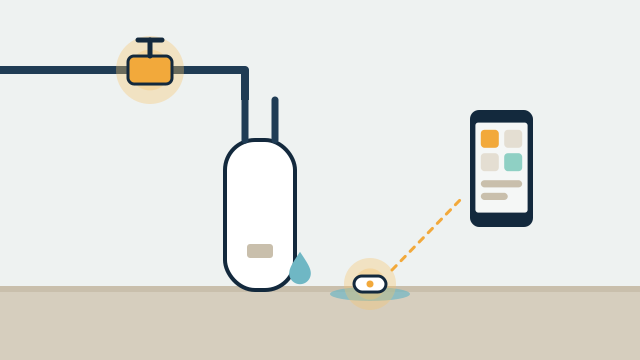
Leak detection has two parts: sensors that notice water and a way to stop the supply. Sensors alone give you an early warning. Adding a supported shutoff valve lets the system act on that warning, even when no one is home.
How do leak sensors and shutoff valves work together?
A leak sensor sits on the floor or in a pan where water would collect. When its contacts get wet, it signals a hub, a Wi-Fi bridge, or the valve controller directly. The platform then sends an alert and, if configured, tells a motorized valve on the main supply to close. Some systems also measure water flow at the main line and can flag unusual continuous flow, which can reveal leaks that never reach a sensor.
The EPA’s WaterSense program suggests a simple check anyone can do: note the water meter reading, avoid using water for two hours, and check the meter again. If it moved, there may be a leak. A flow-monitoring device automates a similar idea.
Where should sensors go?
Sensors belong where water appears first. Typical spots include under kitchen and bathroom sinks, behind the washing machine, near the water heater, under the dishwasher or refrigerator ice line, and by toilets. In Florida, the air conditioning air handler is worth special attention, because a clogged condensate drain can overflow the pan. In businesses, ice machines and rooms with sensitive equipment are common additions.
We walk the property, mark each location, and confirm that the hub or Wi-Fi signal reaches it. Closets, utility rooms, and concrete walls can weaken radio signals, so we test coverage before final placement.
How we assess your existing equipment and valve
If you already have leak sensors, we check each model and whether it can work with the platform and valve we propose. Some brands work only with their own app and valve. Others integrate with platforms such as Home Assistant, SmartThings, or Google Home.
For shutoff, we look at the main valve. Some valve actuators attach to an existing quarter-turn ball valve, so no pipe is cut. If the valve is a different type or in poor condition, a new motorized valve may be needed. Installing a new inline valve is coordinated with a licensed plumber where required. In condos, the main shutoff for a unit can sit in a hallway closet or another common area, which brings association rules into the plan.
What leak detection cannot do
Sensors and valves reduce how long a leak runs unnoticed. They cannot stop water already released, detect water that never reaches a sensor, or replace a professional monitoring service. Alerts are only useful if someone receives them and can respond, which is why we help you decide who gets notified, especially for second homes and rentals.
Illustrative example: A Marathon second home is empty most of the summer. The plan places sensors at the water heater, washer, kitchen sink, and air handler, and adds an actuator on the existing main ball valve. If any sensor detects water, the valve closes and both the owner and a local property manager receive an alert. A lamp near the entry also turns on so the manager can see the hallway on arrival.
How it connects to other systems
Leak detection fits naturally with custom automation routines and with pool and irrigation controls, where supported irrigation timers can be paused during a leak event. An optional support agreement can include scheduled checks of sensor batteries and valve operation.
Get a plan for your property
Tell us about your property and current equipment through the free consultation form, and we’ll contact you as soon as possible.
Scope and planning
What it depends on
- Access to the main water shutoff and enough space to fit an actuator or valve.
- Power near the valve location, plus a hub or Wi-Fi coverage for the sensors.
- Association or building approval for valve work in condos, where rules apply.
Limitations to know
- Sensors only detect water that reaches them; they do not prevent all damage.
- Alerts and remote control need internet, and valves need power or a battery backup.
- This is not alarm monitoring or emergency response; someone still needs to act on alerts.
What affects the cost
- The number of sensors and how spread out they are.
- Whether a valve actuator fits your existing valve or a new inline valve is needed.
- Plumbing work by a licensed plumber where a new valve is installed.
- Integration with your platform and who should receive alerts.
Every project is quoted individually after the free consultation. There's no minimum project size, and travel is included in the quote.
Questions people ask
Can a leak sensor shut off the water by itself?
No. A sensor detects water and sends a signal. Only a supported motorized valve or valve actuator on the supply line can close the water, and the system must be set up to link them.
Do I need a plumber?
It depends on the valve. Some actuators clamp onto an existing quarter-turn valve without cutting pipe. Installing a new inline valve is plumbing work, which we coordinate with a licensed plumber where required.
What happens during a power or internet outage?
Battery sensors keep sensing, and a local hub with backup power may still close a valve. Phone alerts and remote control usually stop until the internet returns. We explain how your specific equipment behaves.
Related services
Related reading
- Water leak alerts and automatic shutoff: what to plan for
Where leak sensors belong, how automatic shutoff valves work with them, and what power and internet outages change. A practical guide for Florida properties. -
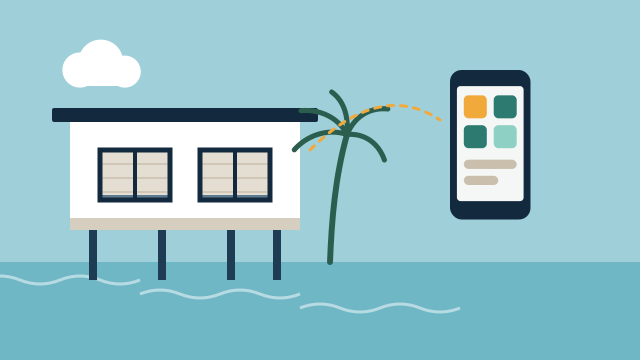 Second-home automation in the Florida Keys: what to plan for
Remote checks, arrival routines, caretaker access, and hurricane-season planning for a Keys second home, with a candid look at internet and power limits. -
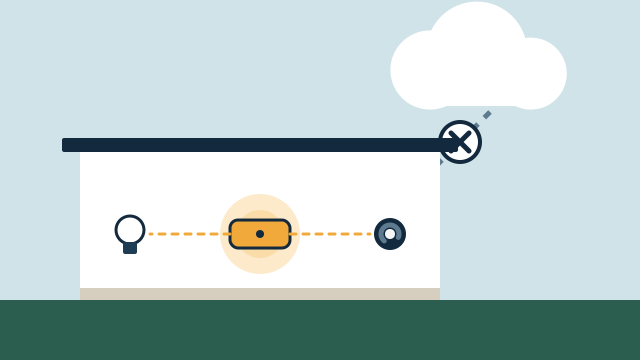 Local control vs. cloud automation: what keeps working, and why it matters
How local and cloud-connected automation differ during internet and power outages, vendor changes, and remote access, and which functions should run locally.
Sources
Tell us about your property
Answer a few short questions and the SwayPC team will contact you to arrange your free consultation and proposal. There's no minimum project size, and travel is included in every quote.